The Hombre Syndrome

from the Wall Street Journal Look Who’s Getting That Bank Settlement Cash –Tens of millions of dollars disguised as ‘consumer relief’ are going to liberal political groups.  by Andy Koenig

The most recent came in April when the Justice Department announced a $5.1 billion settlement with Goldman Sachs. In February Morgan Stanley agreed to a $3.2 billion settlement. Previous targets were Citigroup ($7 billion), J.P. Morgan Chase ($13 billion), and Bank of America, which in 2014 reached the largest civil settlement in American history at $16.65 billion. Smaller deals with other banks have also been announced.

Combined, the banks must divert well over $11 billion into “consumer relief,” which is supposed to benefit homeowners harmed during the Great Recession. Yet it is unknown how much, if any, of the banks’ settlement money will find its way to individual homeowners. Instead, a substantial portion is allocated to private, nonprofit organizations drawn from a federally approved list. Some groups on the list—Catholic Charities, for instance—are relatively nonpolitical. Others—La Raza, the National Urban League, the National Community Reinvestment Coalition and more—are anything but.

This is a handout to the administration’s allies. Many of these groups engage in voter registration, community organizing and lobbying on liberal policy priorities at every level of government. They also provide grants to other liberal groups not eligible for payouts under the settlements. Thanks to the Obama administration, and the fungibility of money, the settlements’ beneficiaries can now devote hundreds of thousands or even millions of dollars to these activities.

HKO

Big banking forced to support these organizations leaves fascinating conflicts.  Regulations stifle startup competition that would not have to pay such nonsense. There must be a name for the dependence on those you hate. I call it the Hombre Syndrome from the movie starring Paul Newman.

In such a deal both parties sell their soul. And ultimately both parties lose.
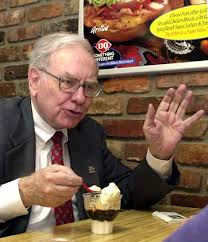


Buffet’s Sweet Goldman Deal

While the players and regulators were struggling to get investors to commit capital to the major banks to avoid a meltdown, Warren Buffet was called upon several times.  He consistently turned them down because the assets were too complicated to understand, and he did not trust most players on Wall Street. But he was finally offered a deal he could not refuse.

Warren was offered $5 billion worth of preferred stock in Goldman Sachs, the Cadillac of the Wall Street firms, with a 10% yield ($500 million annually), convertible into Goldman stock at $115 a share, 8% below the then current price.

That is why cash is king

Info from Too Big To Fail by Andrew Ross Sorkin


The Costs of Poor Customer Service

I have a Schwab account that was closed out years ago. Because of the imperfections of the process of closing accounts it has a balance of eighteen cents.

If I call I will face 20 minutes of voice mail. I stubbornly refuse to spend 44 cents to get 18 cents. There is no e-mail address easy to find on the statement. They spend 35.7 cents to mail me a statement with an 18 cent balance. Times 24 months that is $8.57.

I would love to save them the money, if only they would make it a little easier.


Digging Fannie Mae a Much Deeper Hole

While banks are returning TARP money, some having taken it under duress, Fannie Mae continues to lose money and receive more bailout. In return for such dismal performance executives are getting pay raises and bonuses.

It is a growing contention that Fannie played a disproportionately large role in a once in a century compilation of bad policies, hubris and incompetence.  Fannie Mae was exempt from SEC, FDIC, and FED scrutiny, and was subject to Congressional oversight that refused to acknowledge their systemic role on the financial catastrophe.

The Wall Street Journal noted  in “The Biggest Losers” that while other banks are turning around Fannie Mae and Team Obama is just digging a much deeper hole.

Excerpts:

All of which would seem to make the CEOs of Fannie and Freddie the world’s most overpaid bureaucrats. A release from the Federal Housing Finance Agency that also fell in the Christmas Eve forest reports that, after presiding over a combined $24 billion in losses last quarter, Fannie CEO Michael Williams and Freddie boss Ed Haldeman are getting substantial raises. Each is now eligible for up to $6 million annually.

Freddie also has one of the world’s highest-paid human resources executives. Paul George’s total compensation can run up to $2.7 million. It must require a rare set of skills to spot executives capable of losing billions of dollars.

Where is Treasury’s pay czar when we actually need him? You guessed it, Fannie and Freddie are exempt from the rules applied to the TARP banks. The government gave away the game that these firms are no longer in the business of making profits when it announced that the CEOs will be paid entirely in cash, though it is discouraging that practice at other big banks. Who would want stock in the Department of Housing and Urban Development?

Meanwhile, these biggest of Beltway losers continue to be missing from the debate over financial reform. The Treasury still hasn’t offered its long-promised proposals even as it presses reform on banks that played a far smaller role in the financial mania and panic.


The Seeds of our Next Crisis

One of the most intriguing concepts of economics is the concept of “moral hazard.”  It is a corollary to a more obvious principle that everything has a cost. An understanding of it is critical for those whose world view is a never-ending series of crisis that demand a government solution.

Insurance, for example, encourages the risk it is designed to protect us from.  Seat belts may make us more reckless drivers.  I may be more inclined to eat the high fat burger with cheese if I think I am protected by Lipitor.  Free health care may make us less healthy and more obese.

But nowhere is the cost of moral hazard more significant and more obvious than in our financial system.

We insure bank depositors to bring stability to our financial system, but such insurance means that the depositors are freed from the responsibility of even caring about the bank’s stability.  It also increases the bank’s proclivity for risk taking. They get to pocket profits and get bailed out of losses. We privatize the profits and socialize the risk.

FDIC protection started out at $10,000, and soon went to $40,000. Jimmy Carter raised it to $100,000 and some partially faulted this move with creating the savings and loan fiasco about ten years later.  In the midst of our recent crisis the limit was raised to $250,000 to avoid another bank run.  Given our historical correlation of increasing FDIC protection limits with worsening crisis, I wonder if in our effort to avert the current crisis whether we have simply sown the seeds of the next one.

Those who fault the absence of regulation for our current crisis should look further at the moral hazard created by the very protections embodied in our current regulations.

Regulations written in response to our last crisis do not seem to protect us from the next one.  Rules written as a result of the dot.com bubble did not protect us from the ensuing housing bubble.  In fact our regulators and our government was more of a willing participant via Fannie Mae and Freddie Mac.

In the absence of FDIC insurance perhaps the consumer and society would be better served by an “independent” rating such as the AM Best rating service is for life insurance companies or an equivalent of Moody’s or S&P for small banks.  I do stress the independence which had been seriously compromised in the past.

There will never be enough regulators to counter the number of people who seek loopholes, ply lobbyists, create new products or who otherwise seek to game the system.

Even if we were able to staff enough bureaucracies to squeeze excess risk and abuse out of our financial system, it would likely restrict growth so severely that we may long for the days of a few bubbles and the ensuing market correction.

Facing record deficits this administration needs economics growth desperately. The union card check bill, the budget deficit, the uncertainty of cap and trade, higher taxes on the wealthy and private businesses, and the cost of the health care proposals severely threaten business growth.

But the biggest hindrance may be both an increase in moral hazard that increases the likelihood of the next bubble, and overly restrictive regulations that retard the growth we need to recover from the last one.